
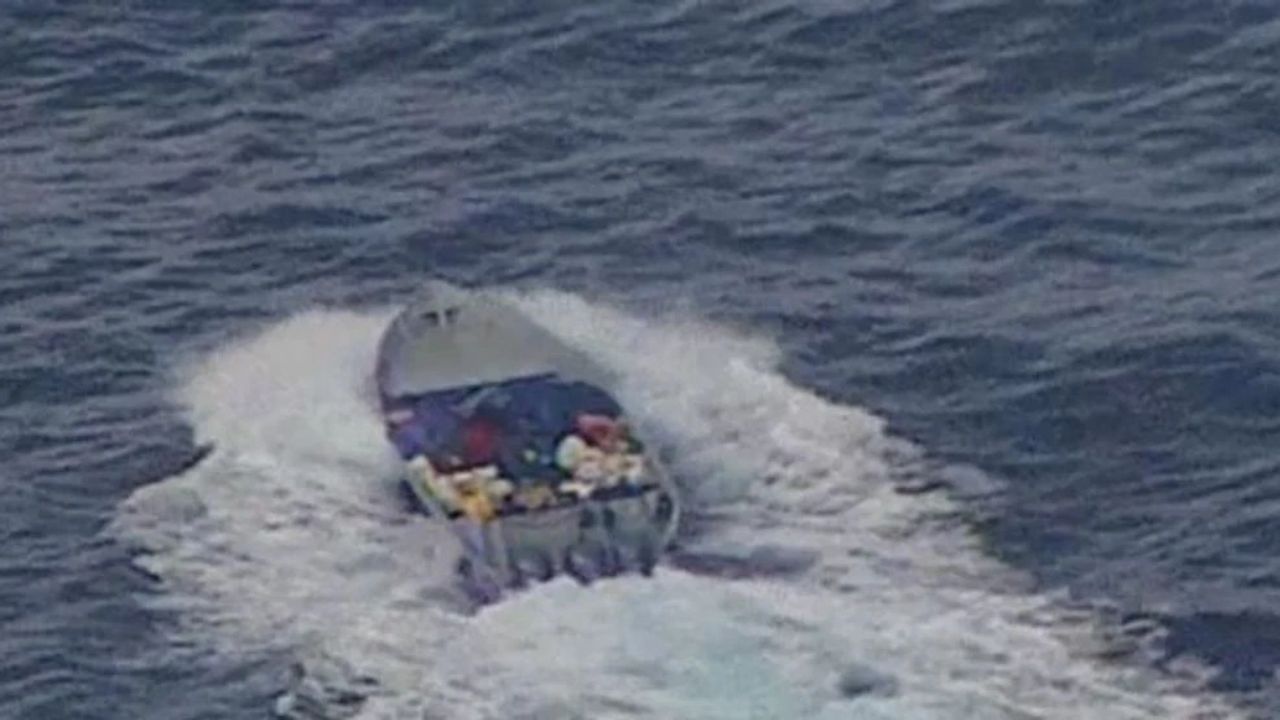
Federal officials confirmed a massive breakthrough in maritime drug enforcement after a U.S. Coast Guard cutter seized more than 20,000 pounds of cocaine from a single vessel this week. The haul marks the largest at-sea drug interdiction in nearly 18 years, underscoring the scale of trafficking routes moving through the Pacific.
Coast Guard Cutter Munro Intercepts Vessel During Major Anti-Drug Operation
The Coast Guard reported that the seizure was carried out by the crew of the Munro, a cutter based in Alameda, California, during ongoing counter-narcotics missions in the Eastern Pacific. The interdiction took place as part of Operation Pacific Viper, a strategic effort directed by the Trump Administration to disrupt high-volume drug movements originating from Central and South America.
According to officials, video captured the moment Coast Guard teams pursued a fast-moving vessel carrying multiple individuals. A helicopter crew deployed to support the mission successfully disabled the non-compliant boat, allowing the Munro’s boarding teams to secure the scene and recover the narcotics.
Authorities did not release additional details regarding the individuals who appeared to be on board the vessel at the time of the seizure.
Largest Cocaine Haul Since the Late 2000s
The 20,000-pound seizure represents a record-setting moment for U.S. maritime drug enforcement. Officials emphasized that at-sea operations remain one of the most effective tools for intercepting narcotics before they enter U.S. borders, where distribution networks become harder to dismantle.
In a statement shared on social media alongside operational footage, the Coast Guard highlighted the scale of the achievement:
“Our maritime fighting force is leading America’s drug interdiction operations, protecting the Homeland, and keeping deadly drugs out of American communities.”
The agency said the Eastern Pacific corridor continues to function as a high-traffic route for cocaine shipments moved by transnational criminal organizations.
Longstanding Efforts to Disrupt Pacific Trafficking Routes
For decades, the Coast Guard has conducted joint missions with regional partners to identify and intercept drug-laden vessels departing from Central and South America. These operations frequently involve:
- Real-time surveillance
- Rapid response from cutters and aviation teams
- Coordination with allied nations
Operation Pacific Viper represents an intensified push to stop these shipments at sea, where interdiction is considered most effective.
The Trump Administration has adopted a more aggressive posture toward drug-trafficking vessels, including the use of lethal strikes in certain cases. These actions have drawn scrutiny after controversial incidents, including a second strike against survivors of a September 2 operation. Administration officials have defended the policy as necessary to protect American communities from cartel-related threats.
Regional Crackdowns Highlight International Cooperation
The Coast Guard’s success came during a week of sweeping drug enforcement actions across the region. Colombian authorities announced that their navy intercepted more than 7 tons of cocaine from boats operating in the Caribbean. The estimated value of the seized drugs exceeded $340 million, and 11 individuals were taken into custody, according to official statements.
Such multinational operations underscore the scale of ongoing trafficking networks and the importance of coordinated enforcement efforts.
Why Maritime Drug Interdictions Matter
Experts note that seizing drugs on the open ocean prevents illicit substances from ever reaching the distribution phase, significantly disrupting cartel operations. At-sea interdictions reduce:
- Overdose risks within U.S. communities
- Criminal organization revenue
- Violence associated with trafficking corridors
The latest 20,000-pound seizure not only sets a historic benchmark but also reinforces the role of maritime enforcement in national security.
What Comes Next
Officials say more details will be released as the investigation continues, including the disposition of the seized vessel and the status of the individuals who were aboard. The Coast Guard is expected to offload the narcotics in a public event in the coming days, a common step in major interdiction cases.
Residents and policymakers alike are watching closely, as the record-breaking haul signals both the magnitude of ongoing trafficking attempts and the increasing capability of U.S. maritime enforcement efforts.
Share your thoughts
Have you followed past Coast Guard interdictions or regional anti-drug operations? Share your experiences and insights in the comments below.