Hillsborough County, Florida – A Florida widow is preparing for a high-stakes civil trial this week, claiming the Hillsborough County Sheriff’s Office is responsible for a deadly crash caused by a deputy speeding at almost twice the legal limit without emergency lights or sirens. Her husband, a 74-year-old Vietnam War veteran, died from the catastrophic injuries he suffered in the collision.
The lawsuit centers on allegations that the deputy was racing to a school bus fight — a call the family argues never justified extreme speed — and that his actions directly led to a preventable tragedy.
What Led to the Deadly Crash
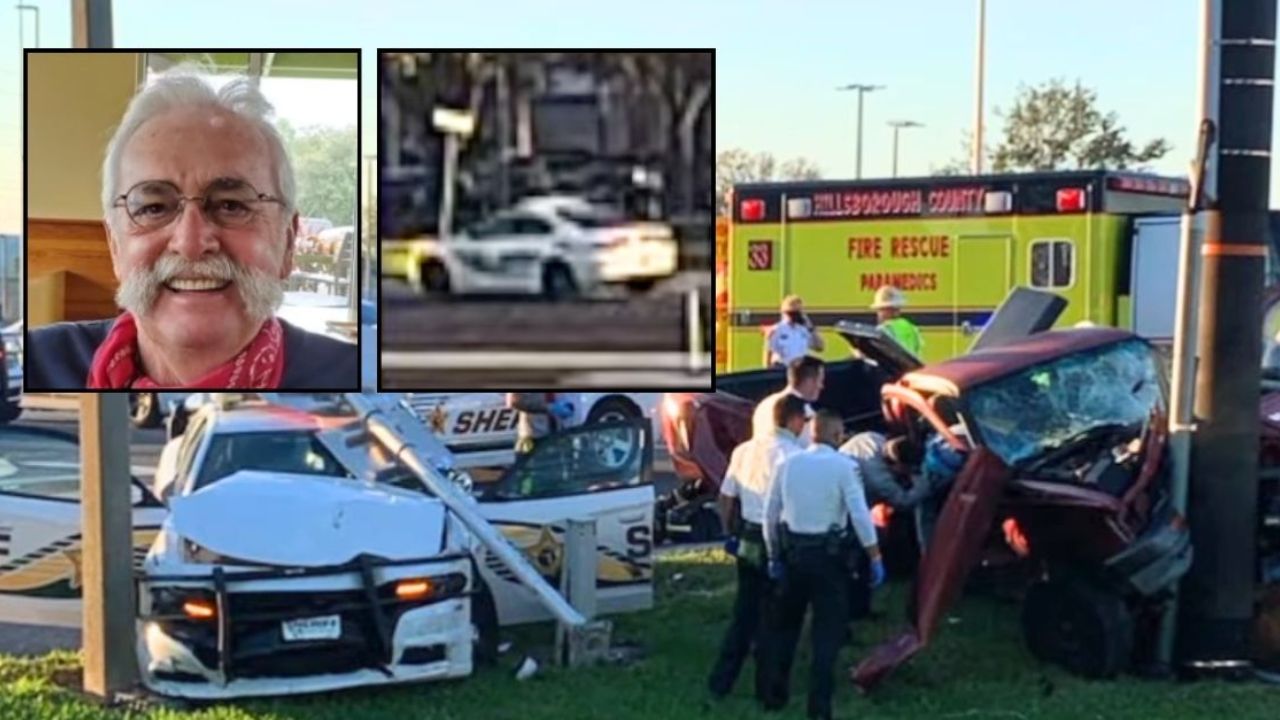
According to the complaint, 74-year-old Michael Keen was driving east on State Road 60 on the morning of Feb. 26, 2021. Keen, a Vietnam War veteran and retired commercial truck driver, attempted to turn left onto Currie Davis Drive after waiting for traffic to clear.
At the same moment, HCSO Deputy Devin S. Wooden, who was westbound on State Road 60, allegedly entered the intersection at 97 mph in a 50 mph zone without activating emergency lights or siren. The lawsuit states Wooden’s 2015 Dodge Charger smashed into the side of Keen’s Toyota T100 pickup, pinning the truck against a utility pole and causing devastating injuries.
Keen survived the initial impact but succumbed a week later after being removed from life support.
Widow Says the Crash Should Never Have Happened
Pamela Martin, Keen’s widow, says the sheriff’s office allowed dangerous and unnecessary driving practices.
“This was not an urgent situation,” her attorney John Castro argues. “Nobody else would escape consequences after causing a fatal crash at 97 miles an hour.”
Martin recalls watching her husband fight for his life in the hospital.
“They removed his life support and within an hour he was gone,” she said. She questions why deputies are allowed to reach extreme speeds on busy morning roads without sirens warning other drivers.
Evidence Raises Questions About Deputy’s Conduct
Court filings indicate the deputy was responding to a fight on a school bus — a situation the plaintiff says did not warrant emergency-level speeding.
Key pieces of evidence include:
Surveillance video
Shows Keen waiting for a safe moment to turn.
Black box data
Indicates Wooden was driving nearly 100 mph at the moment of impact.
Body camera audio
Reportedly captures Wooden telling a responding trooper, “I can’t stay under the radar to save my life.”
Crash report details
The filing states Wooden himself was not wearing a seat belt at the time of the collision.
The lawsuit claims the sheriff’s office is vicariously liable for the deputy’s alleged negligence during his official duties.
Sheriff’s Office Claims the Victim Was Responsible
Attorneys for the Hillsborough County Sheriff’s Office argue that Keen, not the deputy, caused or contributed to the crash. Court documents show several defenses raised by the agency, including:
- Keen allegedly acted negligently
- Keen allegedly was not wearing a seat belt
- Keen’s 1996 Toyota may not have met certain federal safety standards
Castro strongly disputes the claims and accuses the sheriff’s office of shifting theories to shift blame. He calls the new safety-standards argument an attempt to introduce “an entirely new theory of the case” just before trial.
No Charges or Discipline for the Deputy
Despite the deadly consequences, Deputy Wooden did not face criminal charges or internal discipline. That decision remains one of the most painful points for Keen’s family.
“They say ‘serve and protect,’ but they didn’t serve Michael and they didn’t protect him,” Martin said. “If he’d only been going 70, we wouldn’t be here today.”
Trial Begins This Week
Jury selection began Monday, with testimony expected to outline crash data, body-camera footage, police communications, and the department’s policies on emergency driving.
The outcome of the trial could influence future standards for how deputies respond to non-life-threatening calls and may define what level of liability law enforcement agencies bear when emergency driving leads to death or serious injury.
Conclusion
As the case heads to trial, questions remain about policy, accountability, and what qualifies as proper emergency response. For the Keen family, the court battle represents their last hope for answers — and justice.
Share Your View
What do you think about deputies speeding without activating lights or sirens? Share your thoughts in the comments.