
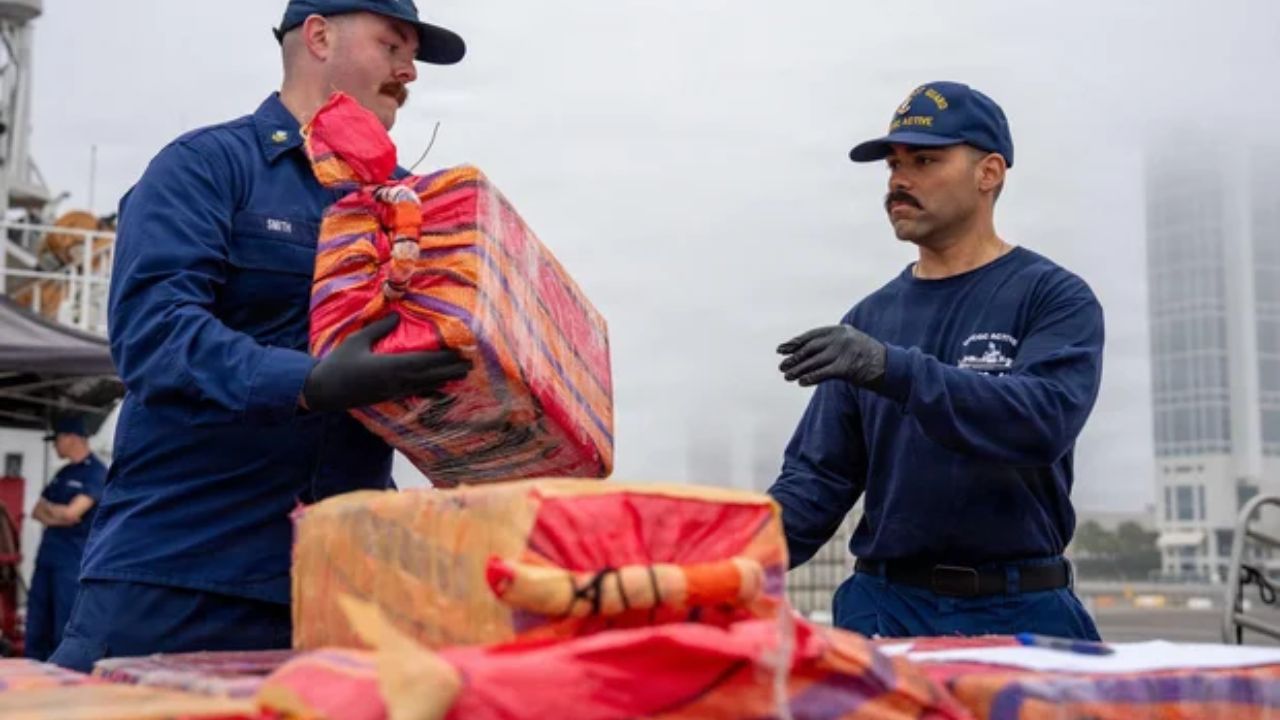
San Diego, California – The U.S. Coast Guard has offloaded more than 27,000 pounds of cocaine in San Diego following a series of high-stakes interdictions in the Eastern Pacific Ocean, where crews used non-lethal disabling fire to stop fast-moving drug smuggling vessels. The massive seizure underscores the continued intensity of maritime drug trafficking routes from Central and South America and the Coast Guard’s expanding enforcement operations in the region.
Massive Cocaine Offload in San Diego
On Monday, the crew of the USCG Cutter Active offloaded over 27,000 pounds of cocaine at a port in San Diego, California. According to the Coast Guard, the majority of the narcotics originated from a major interdiction carried out earlier this month by the USCG Cutter Munro.
The combined haul has an estimated street value of $203.9 million, making it one of the most significant drug seizures of the year. The Coast Guard confirmed the figures through official statements and social media updates following the offload.
Largest Single-Boat Seizure in Nearly Two Decades
Earlier in December, the crew of the Cutter Munro, working alongside Coast Guard air assets, intercepted a go-fast vessel carrying more than 20,000 pounds of cocaine. During the pursuit, Coast Guard aircraft employed disabling fire, targeting the boat’s engines after the vessel failed to comply with orders to stop.
Officials described the seizure as the largest single-boat cocaine interdiction in nearly 20 years, highlighting the scale and sophistication of current maritime smuggling operations.
Multiple Go-Fast Boats Intercepted
In addition to the Munro’s seizure, the crew of the Cutter Active intercepted two additional go-fast boats in the Eastern Pacific Ocean. According to Cmdr. Earl Potter, the commanding officer of the Active, each vessel carried three suspected narcoterrorists.
While Potter did not disclose the specific outcome for each suspect at sea, authorities later confirmed that 12 individuals were arrested across all interdictions. Those arrested now face federal drug trafficking charges in the United States.
How the Coast Guard Uses Disabling Fire
Rear Adm. Jeffrey Novak, deputy commander of the Coast Guard Pacific Area, explained the agency’s approach during an interview with KFMB. He emphasized that disabling fire is used only after vessels refuse to comply with lawful orders.
“We utilize our aircraft to try and interdict,” Novak said. “We have the ability to call a non-compliant vessel and use force from an aircraft. We can fire warning shots and then disabling fire to shoot out the engines of the fast vessel.”
The tactic allows crews to stop smuggling operations without sinking vessels or endangering lives unnecessarily, making it a key tool in non-lethal maritime enforcement.
Operation Pacific Viper Explained
The interdictions carried out by the Active and Munro were part of Operation Pacific Viper, a coordinated effort in which Coast Guard cutters, aircraft, and partner agencies are surged into the Eastern Pacific to disrupt drug trafficking corridors.
The Eastern Pacific remains one of the most heavily trafficked drug routes in the world, with smugglers relying on speedboats, semi-submersibles, and sophisticated evasion tactics to transport cocaine northward.
Crew Recognition and Morale
Cmdr. Potter praised his crew’s performance, noting their resilience and adaptability during long deployments at sea. The Cutter Active is known by the nickname “Little Tough Guy,” a reputation Potter said the crew fully earned during the operation.
“I’m most proud of the crew for their ingenuity, their perseverance and their can-do attitude,” Potter said in a video released by the Coast Guard. “They look through the hardest of days and keep the mission at the forefront of their thoughts.”
Broader Context and Ongoing Controversy
The U.S. government has long focused on maritime interdictions as a primary strategy to combat cocaine trafficking from Central and South America. However, enforcement methods have drawn scrutiny in recent years.
Under the Trump administration, some alleged drug vessels were reportedly targeted with lethal strikes, resulting in dozens of deaths and significant controversy. Critics questioned the legality of such actions, particularly following reports of a second strike on survivors of an earlier incident on September 2. The administration defended the operations as necessary national security measures.
In contrast, Coast Guard officials emphasize that current interdictions prioritize non-lethal force, vessel disablement, and arrests wherever possible.
What Comes Next
With more than 27,000 pounds of cocaine removed from circulation, federal prosecutors are now preparing cases against those arrested, while Coast Guard assets remain active in the Eastern Pacific. Officials say continued pressure on maritime routes is essential to disrupting global drug trafficking networks.
As Operation Pacific Viper continues, authorities expect additional interdictions in the coming months.
Share your experiences or thoughts on maritime drug enforcement in the comments below.