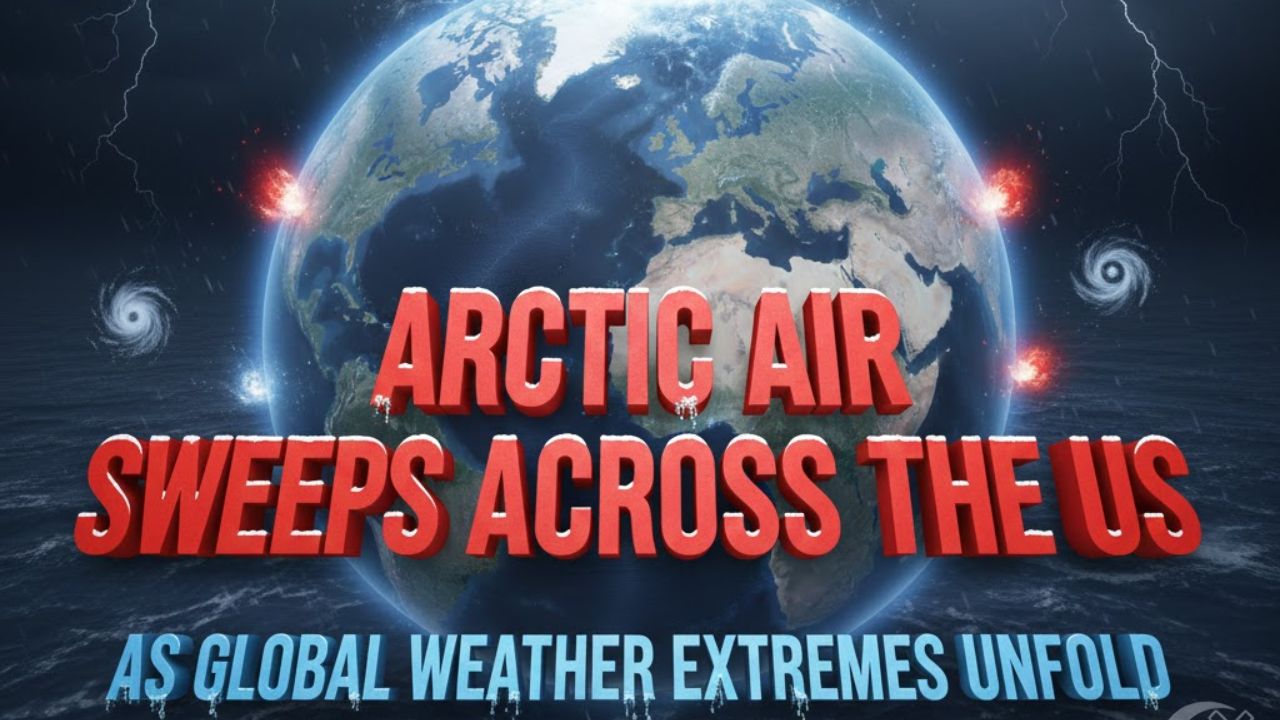
United States – A dramatic shift in weather patterns is unfolding across the U.S. this week as Arctic air surges southward, replacing the record-breaking warmth that dominated much of the country just days ago. The sharp reversal is part of a wider sequence of extreme weather events affecting multiple regions around the world.
Record Warmth Gives Way to Polar Cold in the US
Over the weekend, much of the southern and midwestern United States experienced unusually warm, spring-like conditions. Temperatures were widely 15–20°C above normal for late December, driven by low pressure systems in the west pulling warm, humid air north from the Gulf of Mexico.
This week marks a stark turnaround. A strengthening ridge of high pressure over the western U.S. is allowing a polar air mass to plunge southward. As a result, millions are expected to swap light clothing for winter gear, with freezing temperatures and snow risk spreading across large parts of the country.
South America Sees Historic December Heat
The recent temperature extremes are not limited to North America. In São Paulo, thermometers climbed to 36.2°C, marking the highest December temperature ever recorded in the city.
Meteorologists expect the heat to expand further this week, with elevated temperatures forecast to spread into parts of Chile and Argentina, adding to concerns about prolonged heat stress across southern South America.
Japan Hit by Severe Winter Conditions
Across the Pacific, winter conditions have tightened their grip on Japan. Heavy snowfall and icy roads caused widespread disruption last week, including a deadly motorway pile-up in Minakami, located in Gunma Prefecture, which left two people dead and dozens injured.
More snow is expected in the days ahead. Bitterly cold westerly winds from Siberia are crossing the comparatively warmer Sea of Japan, collecting moisture and producing intense “sea-effect” snow. This phenomenon can blanket large areas of northern and western Japan with persistent heavy snowfall.
Severe Storms Disrupt New Zealand
Meanwhile, summer storms have battered the New Zealand, particularly the South Island. Torrential rain, large hail, and frequent lightning have caused major travel disruptions, with the Canterbury Plains experiencing a rare and powerful supercell storm.
Further severe weather is expected. Forecasts indicate that the North Island may see strong winds and very high rainfall totals, with western areas likely receiving 100 mm of rain and isolated locations potentially reaching 200 mm as a low-pressure system moves through.
A Week Defined by Global Weather Extremes
From Arctic air outbreaks in the U.S. to record-breaking heat in South America, and from blizzards in Japan to severe summer storms in New Zealand, the coming days highlight the growing volatility of global weather patterns. Meteorologists continue to monitor these developments closely as multiple regions brace for further disruption.