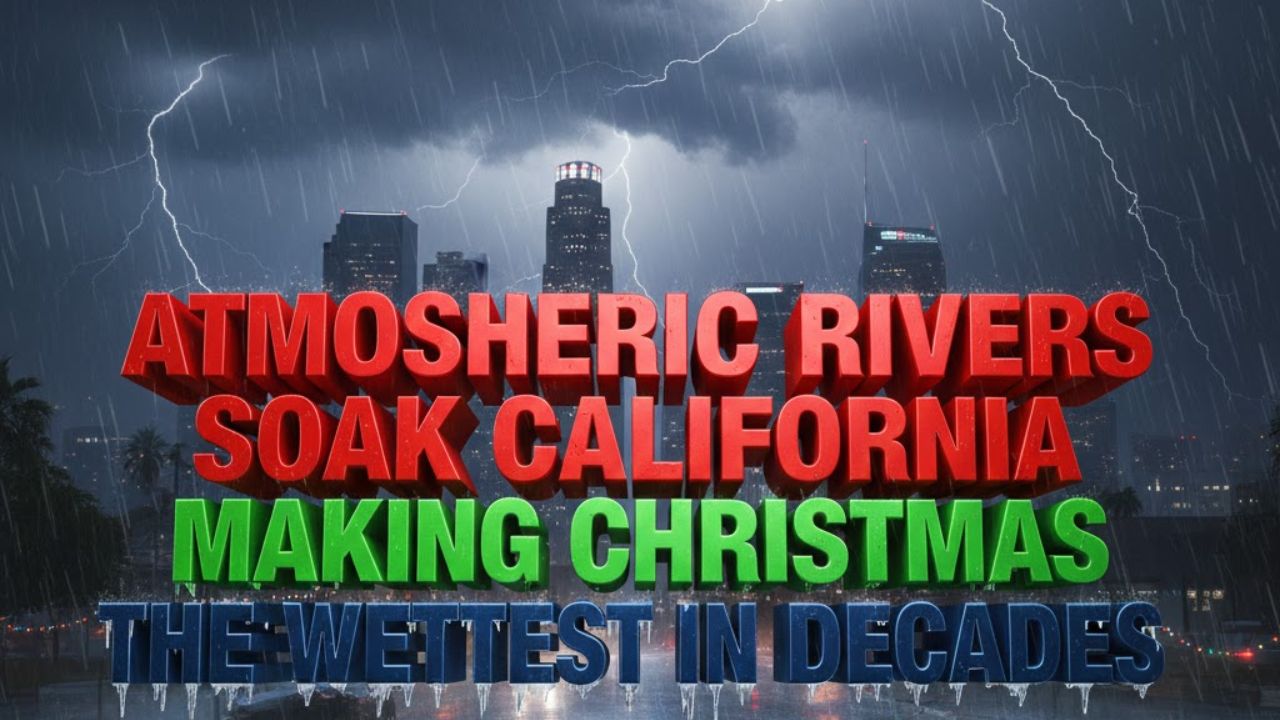
California – A series of powerful storm systems battered California during Christmas week, delivering multiple atmospheric rivers that unleashed torrential rain, dangerous flooding, landslides, heavy mountain snow, and even a rare tornado. The historic weather event produced the wettest Christmas Eve and Christmas Day in Downtown Los Angeles in more than 50 years, according to NBC News reporting and regional weather assessments.
Northern California Hit First by Atmospheric Rivers
The most recent atmospheric river impacted Northern California between December 20 and December 22, dumping between 3 and 14 inches of rain across coastal mountain ranges and the Sierra foothills.
Statewide during that period, officials logged 69 flooding reports, 31 landslides, and 22 wind-damage incidents. Some of the most dangerous conditions were reported near Redding, where flash flooding forced multiple water rescues as creeks and roadways rapidly overflowed.
Record-Breaking Christmas Flooding in Southern California
Rain continued statewide on December 23, but Southern California saw the most extreme impacts on Christmas Eve. Meteorologists issued a rare “high risk” excessive rainfall alert for portions of the Los Angeles Basin.
Several long-standing rainfall records were shattered, including at Los Angeles International Airport, which recorded 1.88 inches of rain—surpassing the previous Christmas Eve record set in 1971. Burbank also broke its 1971 record, measuring 3.42 inches in a single day.
Downtown Los Angeles experienced its rainiest Christmas Eve–Christmas Day period since 1971, ranking as the fourth wettest such two-day stretch on record. When expanded to a three-day period from December 24 to December 26, the city logged its second-wettest total ever recorded.
Other Southern California communities, including Santa Barbara, Oxnard, Long Beach, and Burbank, all experienced their wettest December 24–26 period on record.
Ventura County Sees Major Flooding and Rescues
The heaviest rainfall totals were reported in the Ventura County Mountains, where multiple monitoring stations recorded more than 17 inches of rain over three days.
The Ventura River surged rapidly, cresting at 20.78 feet—well into major flood stage—after rising nearly six feet in just four hours early on December 26. Floodwaters stranded drivers and prompted at least one rescue operation.
Cleanup crews worked continuously across Southern California, including on Christmas Day itself, as communities dealt with mud, debris, and roadway damage.
Mudslides Force Evacuations in San Bernardino County
In Wrightwood, located in San Bernardino County, intense rainfall triggered destructive mud and debris flows on Christmas Eve. Local authorities issued evacuation warnings as flooding overwhelmed streets and threatened homes.
Despite the widespread damage, water officials noted that the late-December storms significantly boosted reservoir levels—an important development as California prepares for the state’s typically dry months ahead.
Sierra Nevada Buried Under Heavy Snow and Extreme Winds
The storms also delivered the first major snowfall of the winter season to the Sierra Nevada, with some locations receiving several feet of snow.
Blizzard-like conditions were compounded by wind gusts exceeding 100 mph, making travel through mountain passes extremely dangerous and forcing closures on key routes.
Rare Christmas Day Tornado Confirmed in Los Angeles
Adding to the extraordinary week of weather, the National Weather Service confirmed that an EF0 tornado touched down on Christmas Day in Boyle Heights. The tornado produced peak winds of around 80 mph, damaging structures and trees in the neighborhood.
Meteorologists described the tornado as rare but consistent with the unstable atmospheric conditions generated by the powerful storm system.
A Historic Week of Weather for California
From record-breaking rainfall and flash floods to heavy Sierra snowfall and a confirmed tornado, Christmas week 2025 will be remembered as one of the most extreme holiday weather periods in California history. While the storms caused significant damage and disruption, they also replenished water supplies critical to the state’s long-term resilience.