Cedar Crest, New Mexico – Newly released police reports reveal that Dominic Castro, a 48-year-old Albuquerque Police Department officer and Army and Air Force veteran, had been taking low doses of ketamine to treat post-traumatic stress disorder before a violent domestic incident that ended with his death following a prolonged standoff with law enforcement in early November.
The documents, obtained by the Journal, provide new insight into Castro’s mental health treatment, alleged abuse within his household, and the sequence of events that led to a SWAT response in the East Mountains and his death from a self-inflicted gunshot wound.
Domestic Violence Call Triggered Police Response
The incident began on Nov. 5, when Castro’s wife and child fled to their school after being dropped off by Castro. According to police reports, the wife immediately called 911, alleging she had been held against her will, repeatedly assaulted, and threatened over an extended period.
In the emergency call and subsequent court filings, Castro’s wife accused him of kidnapping, rape, false imprisonment, and child abuse. She told investigators that Castro had shackled himself to her with handcuffs to prevent her from leaving and subjected her to repeated beatings and sexual assaults, sometimes in front of their child.
Court records show that a judge later issued a warrant for Castro’s arrest on multiple felony charges. The charging documents remain sealed.
Police Cite Severe Mental Health Crisis
Bernalillo County Sheriff’s Office deputies responding to the case described Castro as experiencing an acute mental health emergency.
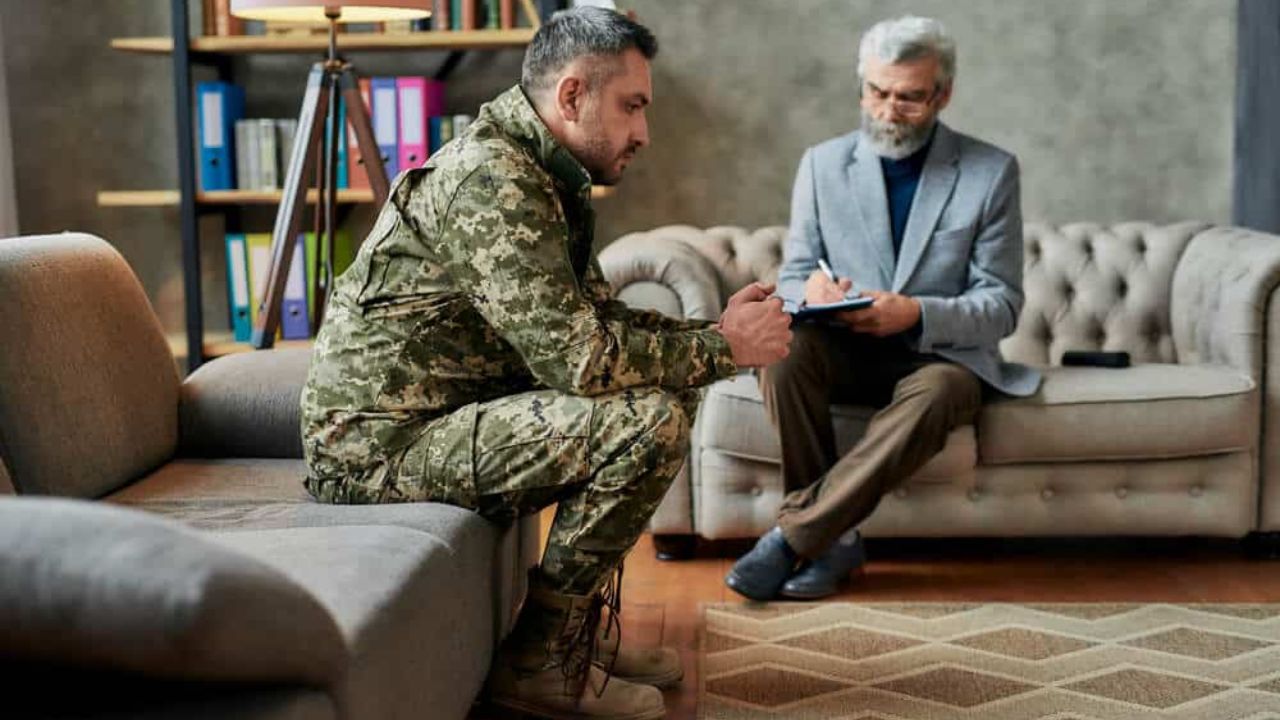
“Castro had various suicidal ideations and was believed to be experiencing an extreme mental crisis,” one report stated, adding that he had recently been suffering PTSD episodes, working overnight shifts, experiencing severe sleep deprivation, and taking low doses of ketamine as part of his treatment.
Castro had been receiving care through the Department of Veterans Affairs, though police reports do not clarify how frequently he was taking the drug or when treatment began.
Ketamine Therapy and VA Treatment Context
The Raymond G. Murphy VA Medical Center is among more than two dozen VA hospitals nationwide offering ketamine therapy for veterans with PTSD. According to VA data, the treatment has been associated with reduced depression severity in roughly 70 percent of patients and a decrease in suicidal ideation in more than half of those treated.
In 2024 alone, the VA reported administering 1,505 ketamine treatments across the country. While many veterans initially expressed uncertainty about the therapy, the agency says patient feedback became more positive following treatment.
Despite this, police reports note that the Albuquerque Police Department was not aware Castro was using ketamine. Department policy requires officers to inform supervisors of any prescription or non-prescription drug use involving controlled substances, particularly when taken on or off duty.
Escalation to Armed Standoff in the East Mountains
After the arrest warrant was issued late that afternoon, deputies surrounded Castro’s home on Pinon Trail in Cedar Crest. Due to Castro’s military background, police training, and access to weapons, authorities deemed the situation high risk and called in a SWAT team.
“Castro’s background significantly elevated the threat level,” a report from the Bernalillo County Sheriff’s Office stated, citing his tactical knowledge, prior firearms instruction experience, and expressed suicidal and homicidal ideations.
Before officers could enter the home, multiple fires were intentionally set inside. Deputies reported that Castro had threatened to burn the house down and kill himself if law enforcement attempted contact.
Fire, Smoke, and Delayed Entry
Heavy smoke filled the residence, preventing immediate entry by SWAT officers. A drone was deployed but visibility was severely limited, forcing deputies to break windows to ventilate the home.
Once visibility improved, the drone identified a deceased dog on the lower level of the house. Investigators believe the animal died from smoke inhalation. Castro had three dogs; one was later reclaimed by his wife, and another was adopted.
Just after midnight, law enforcement breached the garage and discovered Castro’s body on the floor. He had died from a self-inflicted gunshot wound to the head, ending the standoff.
Professional Background and Prior Cases
Castro joined APD in July 2023 and worked as a Field Services Bureau officer, primarily responding to emergency calls. Like many newer officers, he had been assigned to the graveyard shift.
In the months prior to his death, Castro had been active in homeless encampment enforcement and traffic policing. He was also named as a defendant in a wrongful death lawsuit stemming from a separate police shooting involving Matthew “Solo” Garcia. While two officers were found to have violated department policy in that case, Castro faced no disciplinary action.
His final shift was Nov. 2, three days before the standoff.
Legal Proceedings Continue After His Death
Following Castro’s death, attorneys filed a petition seeking the appointment of a wrongful death personal representative to manage potential litigation on behalf of his estate. Castro’s wife declined to comment publicly, and the petitioner was unavailable for comment.
Broader Questions About Mental Health and Policing
The case has renewed attention on the intersection of law enforcement stress, military trauma, overnight shift work, and experimental mental health treatments. While ketamine therapy has shown promise for some veterans, police reports in this case highlight the complexity of managing severe PTSD alongside armed public service roles.
Conclusion
The death of Dominic Castro followed weeks of alleged domestic abuse, a rapid escalation into an armed standoff, and a documented mental health crisis involving PTSD and ketamine treatment. As investigations and legal proceedings continue, the case underscores the urgent need for stronger safeguards, communication, and support systems for officers and veterans facing severe psychological distress.
Share your experiences in the comments below.