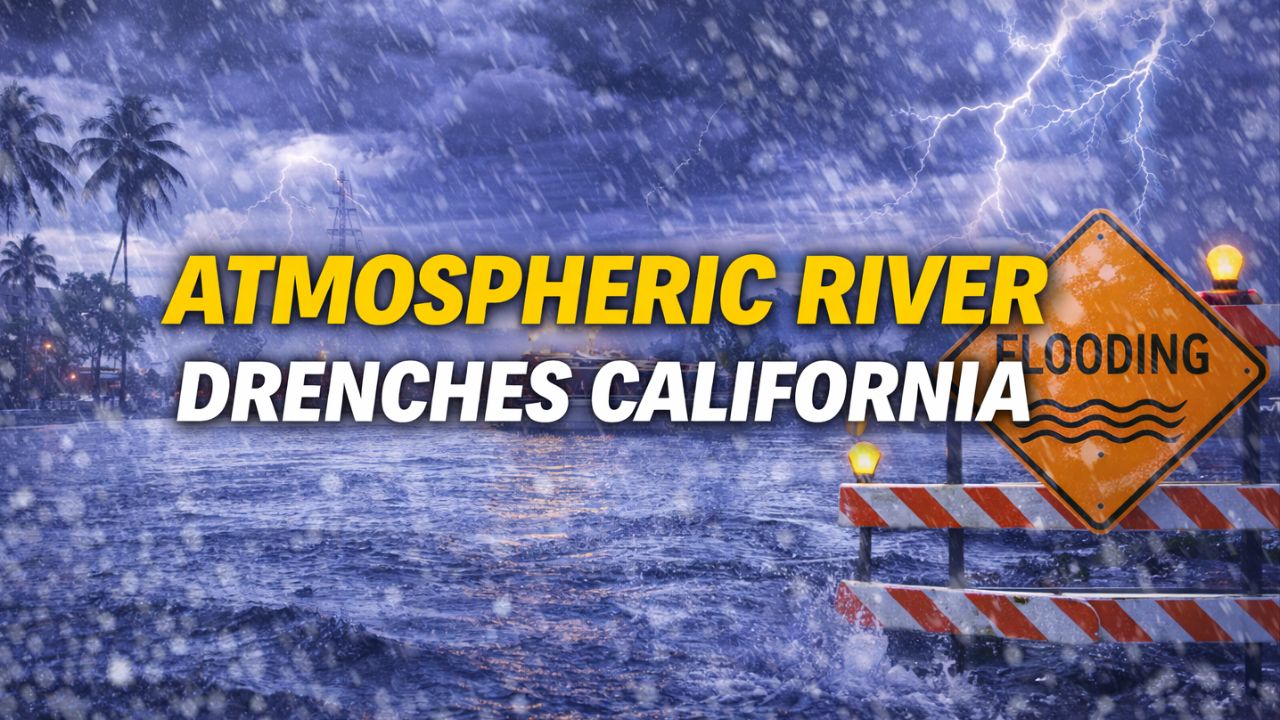
Sacramento, California — California is bracing for another powerful round of extreme winter weather as a second atmospheric river lines up to unleash a prolonged firehose of rain and mountain snow across much of the state through Christmas Day. Forecasters warn the storm sequence could bring widespread flooding, mudslides, travel disruptions, and dangerous conditions, especially during one of the busiest travel weeks of the year.
Meteorologists say two major atmospheric rivers will funnel deep Pacific moisture into California, with impacts shifting from Northern California early in the week to Central and Southern California by Christmas.
The first atmospheric river already soaking Northern California
The first atmospheric river is already in progress and will continue affecting Northern and Central California through Wednesday. Heavy rain is targeting the Sacramento Valley and San Francisco Bay Area, where 2 to 4 inches of rain is expected, with locally higher totals.
San Francisco alone could receive one to two times its average December rainfall by the end of the storm sequence. In mountainous areas, rainfall totals are even more concerning.
On west- and southwest-facing slopes of the Coast Ranges and Sierra Nevada, forecasters expect 4 to 12 inches of rain, with localized amounts approaching 20 inches in extreme cases.
At times, rainfall rates may reach multiple inches in just a few hours, overwhelming storm drains, flooding city streets, and causing small streams and short-run rivers to rapidly overflow.
Second atmospheric river targets Central and Southern California
A second atmospheric river is forecast to strengthen late Tuesday and push into Central and Southern California from Tuesday night through Christmas Day. This system will bring prolonged rainfall to densely populated areas, including Los Angeles and San Diego.
The Los Angeles Basin is forecast to receive 4 to 6 inches of rain, while surrounding foothills and mountains could see significantly higher totals. Downtown Los Angeles, which saw unusually heavy rainfall earlier this fall, may receive two to three times its normal December rainfall by the weekend.
The Transverse Ranges are expected to take the hardest hit, with 6 to 12 inches of rain possible on southwest-facing slopes. Even typically dry desert regions of southeastern California could see up to an inch of rainfall, an unusual and potentially disruptive amount.
Flooding, mudslides, and travel disruptions likely
As soils become saturated, the risk of mudslides, debris flows, road washouts, and hillside collapses will increase sharply — especially near burn scars and steep terrain.
Urban flooding is also a growing concern, as intense rainfall overwhelms drainage systems in cities large and small.
Air travel is expected to be impacted as well. Heavy rain and gusty winds could lead to flight delays and cancellations at major airports including San Francisco, Los Angeles, and San Diego, with ripple effects across the national aviation network.
Storm may rapidly strengthen, bringing damaging winds
Forecasters warn the storm system driving these atmospheric rivers could rapidly intensify into a bomb cyclone offshore. Even if it falls short of official classification, the storm is expected to generate very strong winds along the California coast.
Wind gusts of 50 to 70 mph are likely, with higher gusts possible in mountain passes and ridges. Coastal areas may experience power outages, downed trees, and dangerous marine conditions.
Residents are urged to secure loose outdoor items, including holiday decorations, which could become hazardous projectiles in high winds.
Sierra Nevada faces feet of snow and dangerous travel
While rain dominates lower elevations, the Sierra Nevada will see heavy snow as colder air moves in later this week. Snow levels will drop enough for 1 to 2 feet of snow to accumulate at and below mountain pass levels from late Wednesday through Friday.
Major routes such as Interstate 80 near Donner Pass could become impassable at times, bringing mountain travel to a standstill. While the snow is welcome for ski resorts, access roads may be temporarily blocked by heavy accumulation.
Unsettled weather continues beyond Christmas
Even after the atmospheric rivers weaken, enough moisture will linger to bring additional rounds of rain and mountain snow into the weekend between Christmas and New Year’s.
Snow showers will continue in the Sierra Nevada and could also affect Southern California mountain passes, including portions of I-5 and I-15, creating slippery driving conditions.
According to AccuWeather, the same stormy Pacific pattern will continue impacting Oregon, Washington, and parts of the Intermountain West, regions that have already experienced above-normal precipitation this winter.
Residents and travelers are urged to monitor local alerts, avoid flooded roadways, and adjust holiday plans as needed while this active pattern remains in place.
How is the incoming storm affecting your Christmas travel or holiday plans? Share your location and experience in the comments.